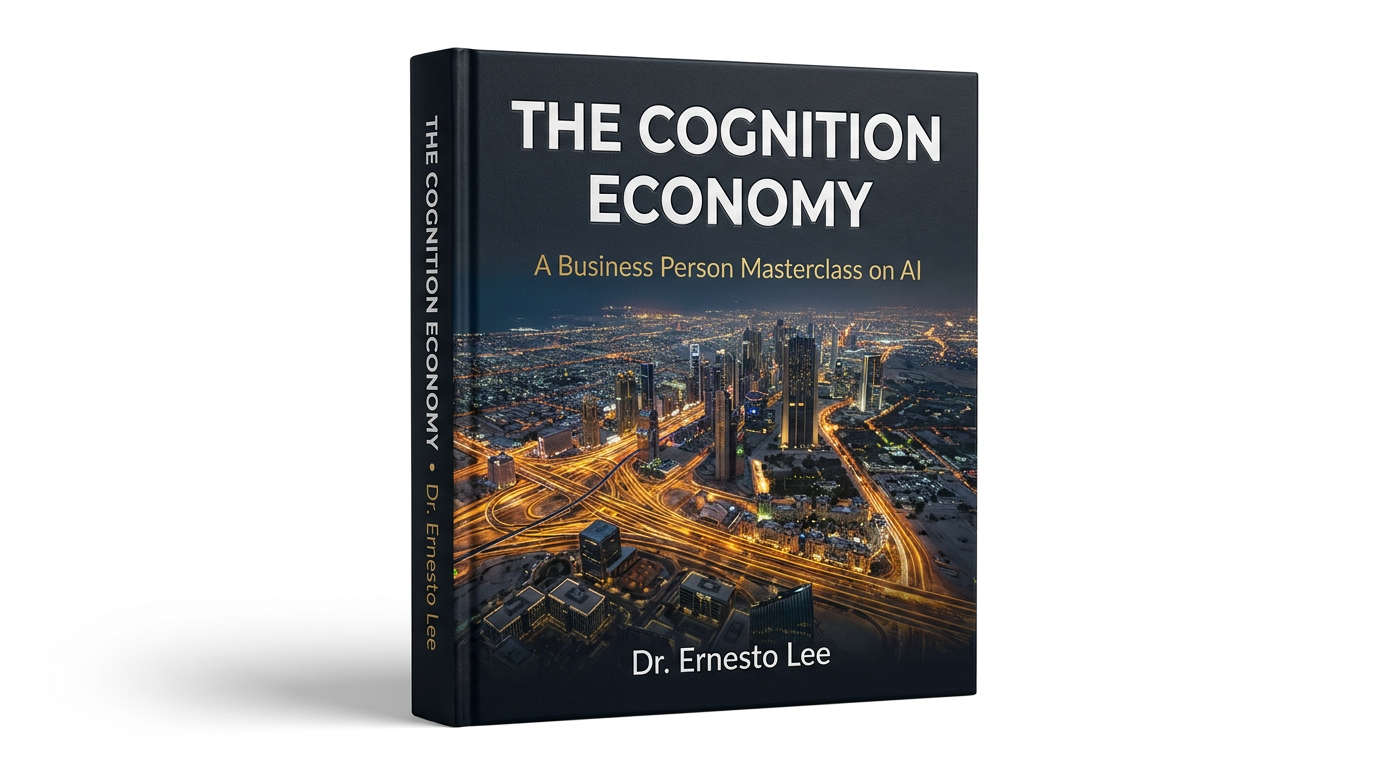
Figure 1:The Cognition Economy · Dr. Ernesto Lee
The Cognition Economy
A Business Person’s Masterclass on AI
By Dr. Ernesto Lee
Everything in this book is explained in business English first. If you can read a P&L, you can read this.
Designed to be finished at lunch. Every chapter is a self-contained TED Talk you can act on today.
Every module ends with a real exercise. Not a quiz — something you actually do before turning the page.
What This Book Is About
For the past century, competitive advantage meant one thing: information asymmetry. If you knew something the market didn’t, you could charge for the gap. That moat held for generations.
Then the internet handed every villager a drawbridge controller.
And now AI is rolling a siege engine up to the last walls that remained.
This is not another “AI tools” book. It is not a guide to writing better prompts. It is not a list of apps. It is a masterclass in redesigning work — your work, your team’s work, your organization’s work — for the era in which cognition is rentable.
By the time you close this book, you will not just use AI. You will build around it.
The Two Ideas That Run Through Every Chapter
An LLM is intelligence, not knowledge. Think of Claude Opus 4.7 as a person with an IQ of roughly 180. Einstein clocked in around 160. For $20/month, you now have the most powerful reasoning partner in human history — but it only knows what you put in front of it.
Intelligence is what the model brings. Knowledge is what you bring.
(Credit: Matty Squarzoni)
Imagine that 180-IQ mind locked in a pitch-black room. You ask, “What’s on the desk?” It cannot answer — not because it isn’t smart, but because it cannot see anything.
Flash a beam of light and ask again. Now it explains, contextualizes, synthesizes.
Context is the flashlight beam. Every technique in this book is a way to aim a better one.
Who This Book Is For
This book was written for business people — period.
The undergraduate who wants to graduate already operating like a pro
The MBA student who wants to lead, not be replaced
The operator who needs to ship, not theorize
The founder staring at a blank screen and a $20 subscription
The manager being asked to “do something with AI”
The marketing director, the sales lead, the finance analyst, the consultant
You do not need a computer science background. You do not need to have written code. If you can use a web browser and read this paragraph, you have everything you need.
How to Read This Book
Every chapter follows the same rhythm:
Intuition first — an analogy, a short story, or a mental model
Detail second — only after you get it do we go deeper
Applied exercise last — do something real before you turn the page
The book uses two recurring analogies — the IQ in a box and the Flashlight Theory — that weave through every module. Once you have them, everything else clicks into place.
Suggested pace: One chapter per day. Finish each exercise before moving on. The book compounds; skipping the exercises costs you more than you think.
The Modules
The historical lens. Every economic revolution begins with a new thing that becomes rentable. This one is cognition.
The seven things you must know cold. Tokens, context windows, model families, context rot, and voice. Everything else assumes them.
Your environment is your edge. Build the three-tool stack — Claude, Gemini, Antigravity — and never work in first gear again.
Connecting your AI to the rest of your stack. MCP gives the 180-IQ mind hands.
A skill is a recipe — written once, executed forever. This is where you stop being a user and start being a builder.
“Prompt engineering” is the first inning. Six disciplines. Six ways to aim the flashlight. The professionals distinguish between all of them.
Ready, aim, fire. The single most valuable workflow habit when working with an AI agent.
Turn a brilliant stranger into a brilliant colleague. Build the compounding asset.
The app store for your AI. Other people’s hard work, packaged for one click.
The specialist firm. A constellation of well-scoped sub-agents beats one brilliant generalist.
The jazz quartet plays different music than a soloist. Only if the players can hear each other.
When the work outgrows the surface. Off-the-rack vs. custom-tailored.
Compound interest for your workflow. Every conversation is a deposit if you let it be.
From conversational to ambient. A great AI system is proactive — it shows up before you ask.
Formula 1 teams install roll cages because they want to go faster, not slower.
The strategic chapter. Why the moat is draining, and where the new premium hides. Read this one twice.
The architectural future. Agent tissues, not agent corporations. Three billion years of evidence.
Course Information
About the Author
Dr. Ernesto Lee is an educator, author, and entrepreneur whose work sits at the intersection of artificial intelligence and business. He is the author of AI and the Art of Productive Struggle and The Apex Rulebook, holds faculty appointments at major institutions, and has built and exited several technology ventures.
His teaching focuses on what he calls productive struggle — the belief that real learning happens when authentic cognitive challenge meets the right tools.
FAU Faculty Profile: business.fau.edu
Blog and writing: drleee.io
Company: drleee.ai